About 86GUIDE Hiroshima
Origin of the Name
The name “86GUIDE Hiroshima” comes from “86” (hachiroku), which represents August 6, the day the atomic bomb was dropped on Hiroshima.
We chose this number because it is simple, memorable, and meaningful. As a guide based in Hiroshima, I want to honor August 6 and help more people learn about this day—so that it can become a starting point for thinking about peace.
The name is also inspired by local initiatives in Hiroshima. Teams such as Sanfrecce Hiroshima and the Hiroshima Toyo Carp hold Peace Matches and Peace Night Games, during which players wear jerseys with the number 86. These activities reinforced the significance of the number and its connection to peace.
“Hachiroku” comes every year. I do not want August 6 to remain only a story of the past. Through my guiding, I hope to connect the past with the present—and carry its message into the future.
About the Logo
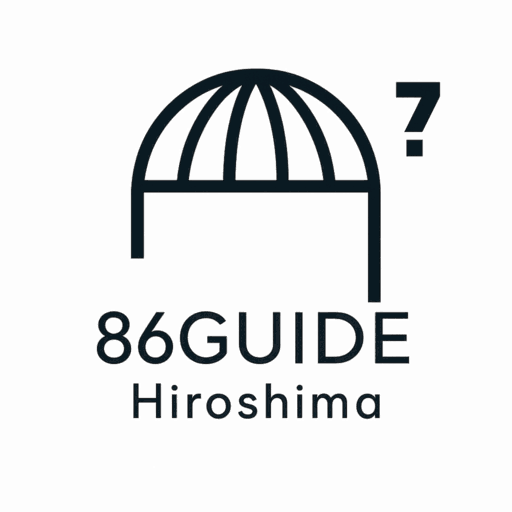
The logo incorporates the following key elements:
- The Atomic Bomb Dome — A symbol of Hiroshima, representing the devastation caused by the atomic bomb and the enduring value of peace. It reflects a commitment to preserve the memory and pass the stories on to future generations.
- A symbol combining “7” and “?” — The number 7 represents August 7, the day after August 6. It symbolizes the responsibility of generations who did not experience that day to continue telling its story, and the importance of thinking about peace not only on August 6 but in everyday life. The question mark (?) expresses an attitude of continuous learning—of questioning, thinking, and reflecting rather than accepting simple answers.
Our Philosophy
Learning about “Hachiroku” (August 6) is not only about looking back at the past. I believe it is also about thinking carefully about the present—and the future.
To learn about August 6 is to value the time we are living in now, and to value ourselves as human beings.
I was born and raised in Hiroshima, and through my work as a guide in Hiroshima Peace Memorial Park, I gradually developed a strong desire to share the city of Hiroshima with more people around the world.
At the same time, I have experienced depression and am still in recovery. Through this experience, I have learned the importance of caring for the present moment—and of caring for myself.
As a guide, my responsibility is to convey history and culture accurately. But beyond that, I also hope to share something more fundamental: the value of living, here and now.
I hope that through my guiding, visitors can come to appreciate Hiroshima—and perhaps also come to be a little kinder to themselves.
With care, respect, and sincerity, I guide thoughtfully and with warmth.